Start here: a short reading that shows what hooks, what helps, what pushes back, and where it becomes concrete.
1. Big Three, Personal Essence
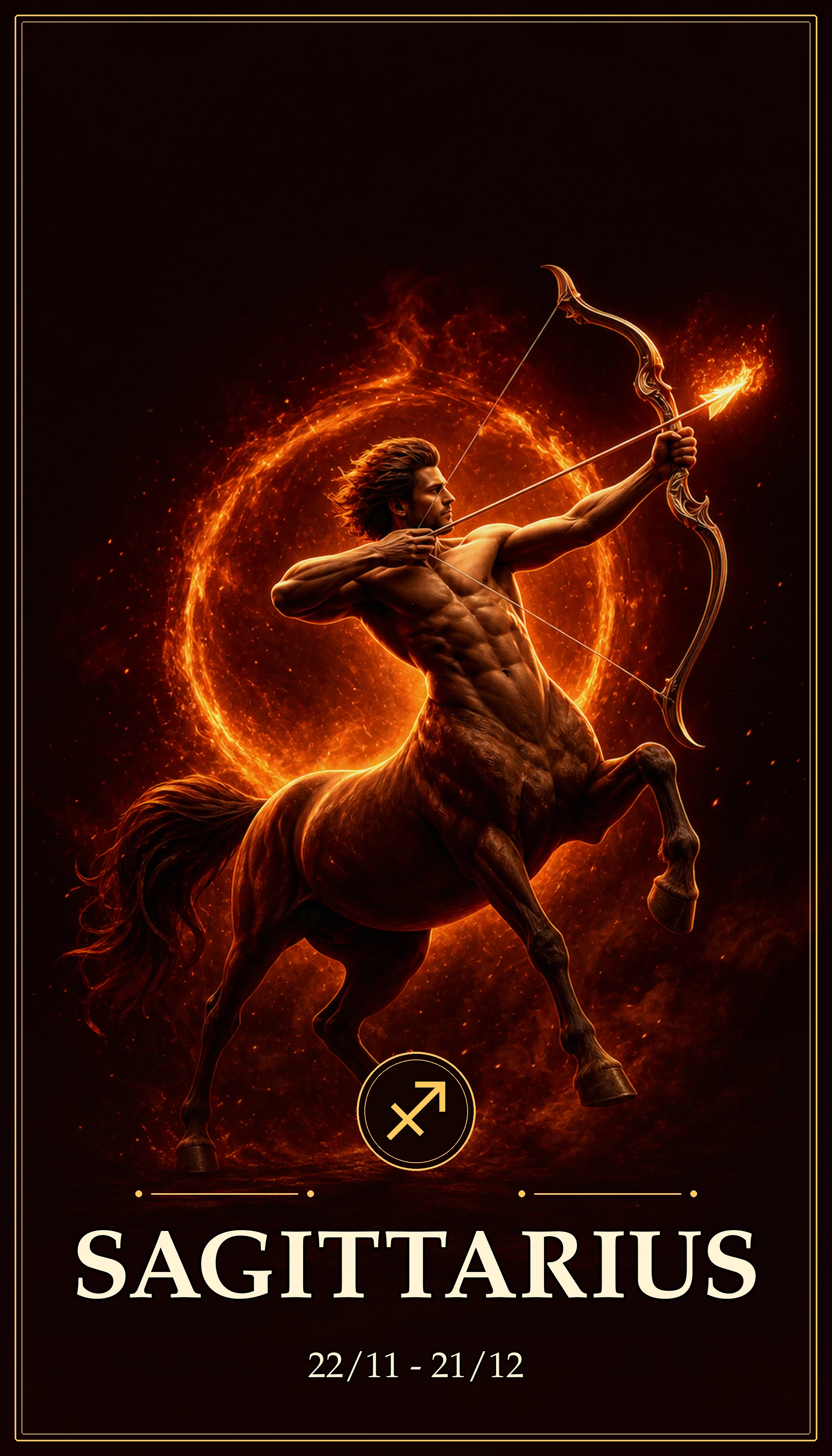
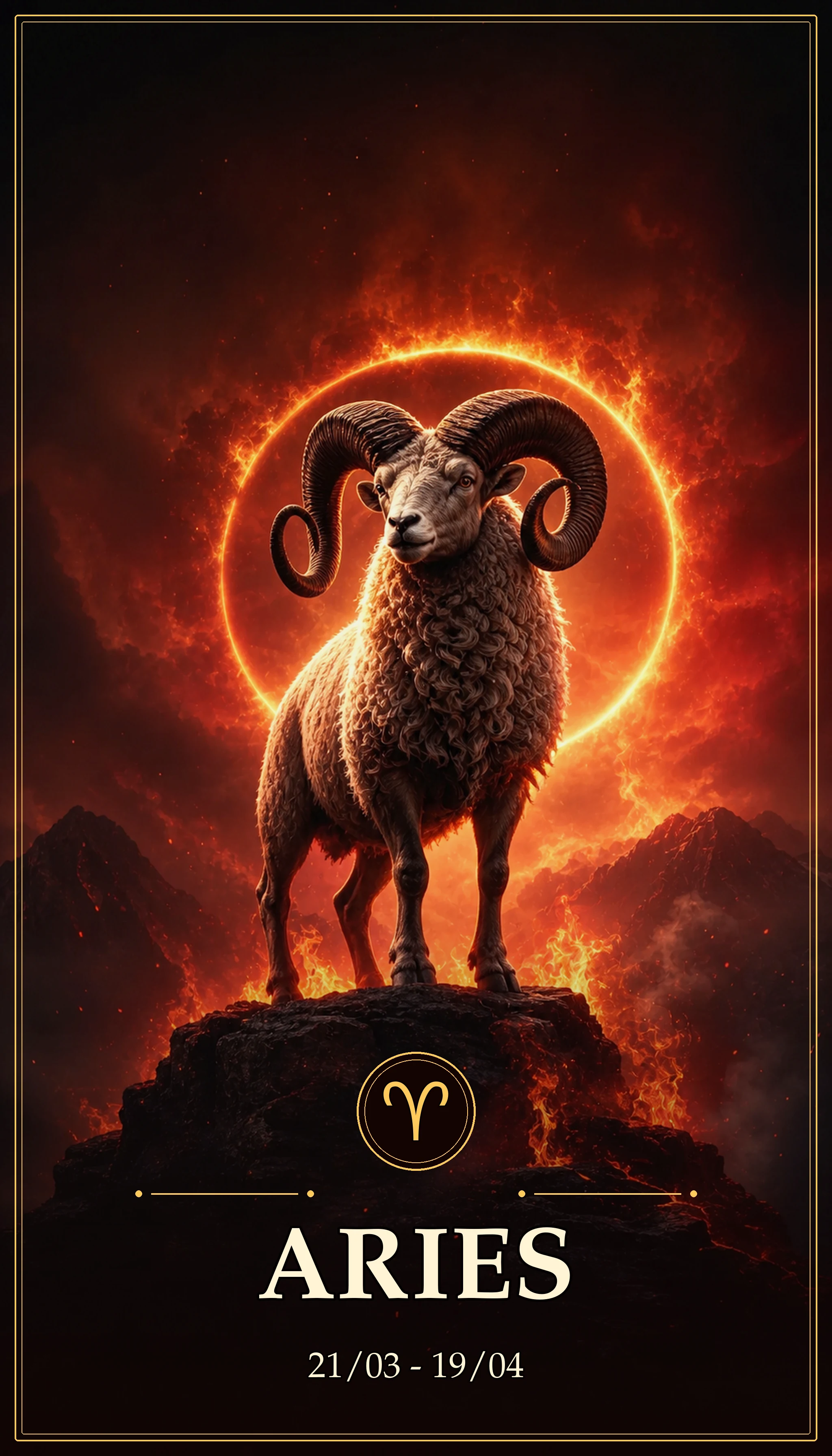
Sun in Sagittarius · Moon in Taurus · Aries Rising
First hook: this is where the chart often becomes recognizable in real life. Sun in Sagittarius: identity and direction move through expansion, travel, belief, and the search for meaning; Moon in Taurus: emotional safety looks for nature, good food, physical sensuality, roots, resources, and perseverance; Aries Rising: the first way into situations uses initiative, speed, confrontation, and direct action. Then read the supports, tensions, and houses to see where this base becomes easy, charged, or visible.
2. Dominants (visible planets)
No clear angular dominant
No planet is close enough to an angle to dominate visibly. Read the Big Three, exact aspects, and important houses instead.
3. Important harmonious aspects
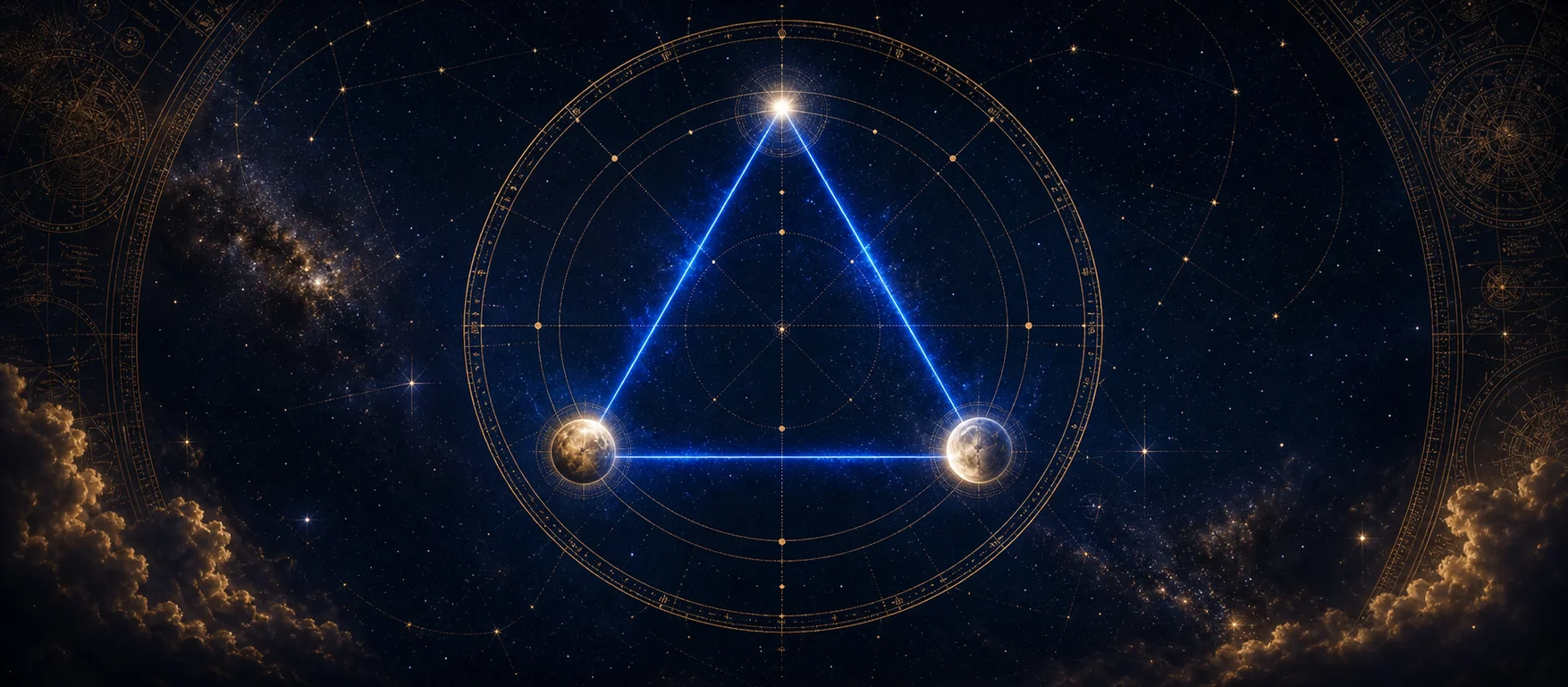
Harmonious triangle: Saturn, Moon, and Neptune
This is the easiest door into the chart: it shows what tends to cooperate naturally.
This pattern describes what comes more easily. It shows up mainly through House 1 (body, presence, and first reactions), House 6 (work, routines, health, and daily organization), and House 9 (beliefs, studies, travel, and worldview). It connects Saturn (responsibility, limits, effort, and patience), Moon (emotional needs, instinct, and inner safety), and Neptune (dreams, ideals, imagination, and confusion).
This is the clearest cooperation pattern in the chart: Moon trine Saturn (orb 1.3°), Saturn trine Neptune (orb 2.1°), and Moon trine Neptune (orb 3.4°). It shows where functions support each other, recover, or come naturally when used together. Because several planets are connected, the full pattern matters more than one isolated aspect.
-
Harmony
Moon trine Saturn (orb 1.3°)
Trine: Moon in Taurus in House 1 can support Saturn in Capricorn in House 9 naturally and positively. For this pair, the aspect gives positive steadiness when personal dream, inner child, and mother image accept structure. Mother-image layer: childhood, mother image, and inner child are supported by Saturn.
-
Harmony
Saturn trine Neptune (orb 2.1°)
Trine: Saturn in Capricorn in House 9 can support Neptune in Virgo in House 6 naturally and positively. For this pair, the aspect gives positive ease giving solid form to a dream or collective image.
-
Harmony
Moon trine Neptune (orb 3.4°)
Trine: Moon in Taurus in House 1 can support Neptune in Virgo in House 6 naturally and positively. For this pair, the aspect gives positive ease between sensitivity, imagination, personal dream, and audience receptivity. Mother-image layer: childhood, mother image, and inner child are supported by Neptune.
4. Important tensions
Tension circuit: Venus, Jupiter, and Neptune
This is the pressure line to read first: it shows where tension repeats in concrete situations.
This pattern shows where pressure builds fastest. It shows up mainly through House 2 (money, security, and self-worth), House 6 (work, routines, health, and daily organization), and House 8 (intimacy, shared money, crisis, and transformation). It connects Venus (attraction, pleasure, taste, and relationships), Jupiter (growth, faith, luck, and confidence in the future), and Neptune (dreams, ideals, imagination, and confusion).
This is the clearest friction pattern in the chart: Venus opposite Jupiter (orb 3.3°) and Venus square Neptune (orb 3.3°). It shows where pressure, contradiction, or repeated effort concentrates. Because several planets are connected, the full pattern matters more than one isolated aspect.
-
Tension
Venus opposite Jupiter (orb 3.3°)
Opposition in real life: The house conflict is between House 8 (sexuality, shared power, crisis, and invisible bonds) and House 2 (resources, values, and security); pressure in one field tends to reactivate the other. For this pair, the aspect sets Venus against Jupiter: taste, relationship, pleasure, or the wish to be liked can conflict with excess, promise, generosity, or the need to widen life.
-
Tension
Venus square Neptune (orb 3.3°)
Square in real life: House 8 (sexuality, shared power, crisis, and invisible bonds) is in friction with House 6 (daily work, technique, and bodily discipline); this can create blockage, inhibition, overreaction, or repeated conflict between the two fields. For this pair, the aspect creates tension between desire, ideal, glamour, vagueness, and disappointment: the person may project too much image onto love or be caught in other people's projections.
5. Important houses
These houses answer the concrete question: where in life does the chart become visible? Look here for the repeated choices, relationships, work, or crises that make the rest of the chart real.
-
House 9: Sun, Mercury, Mars, and Saturn
vision, belief, study, and wider horizons.
-
House 1: Moon
presence, body, and the way experience is entered.
-
House 8: Venus
sexuality, shared power, crisis, and invisible bonds.