Start here: a short reading that shows what hooks, what helps, what pushes back, and where it becomes concrete.
1. Big Three, Personal Essence
Sun in Pisces · Moon in Virgo · Virgo Rising
First hook: this is where the chart often becomes recognizable in real life. Sun in Pisces: identity and direction move through imagination, faith, compassion, dream, and permeability; Moon in Virgo: emotional safety looks for precision, method, usefulness, and attention to detail; Virgo Rising: the first way into situations uses precision, method, usefulness, and attention to detail. Then read the supports, tensions, and houses to see where this base becomes easy, charged, or visible.
2. Dominants (visible planets)
Visible planets: Sun and Uranus
Dominants are planets close to the Rising sign, Midheaven, Descendant, or IC. They describe what becomes visible quickly: presence, public role, direct relationship style, or private climate. Every angular dominant found within the orb is listed below.
-
Visible
Sun near the Descendant (orb 4.3°)
The Sun is close to an angle: its signature shows more easily through direct relationships, partners, opponents, and the way others are met. Here, that highlights identity, ego, father figure, visibility, and direction. It matters most when it repeats in choices, relationships, or visible role.
-
Visible
Uranus near the Midheaven (orb 4.8°)
Uranus is close to an angle: its signature shows more easily through social role, reputation, career, and public image. Here, that highlights disruption, independence, and change. It matters most when it repeats in choices, relationships, or visible role.
3. Important harmonious aspects
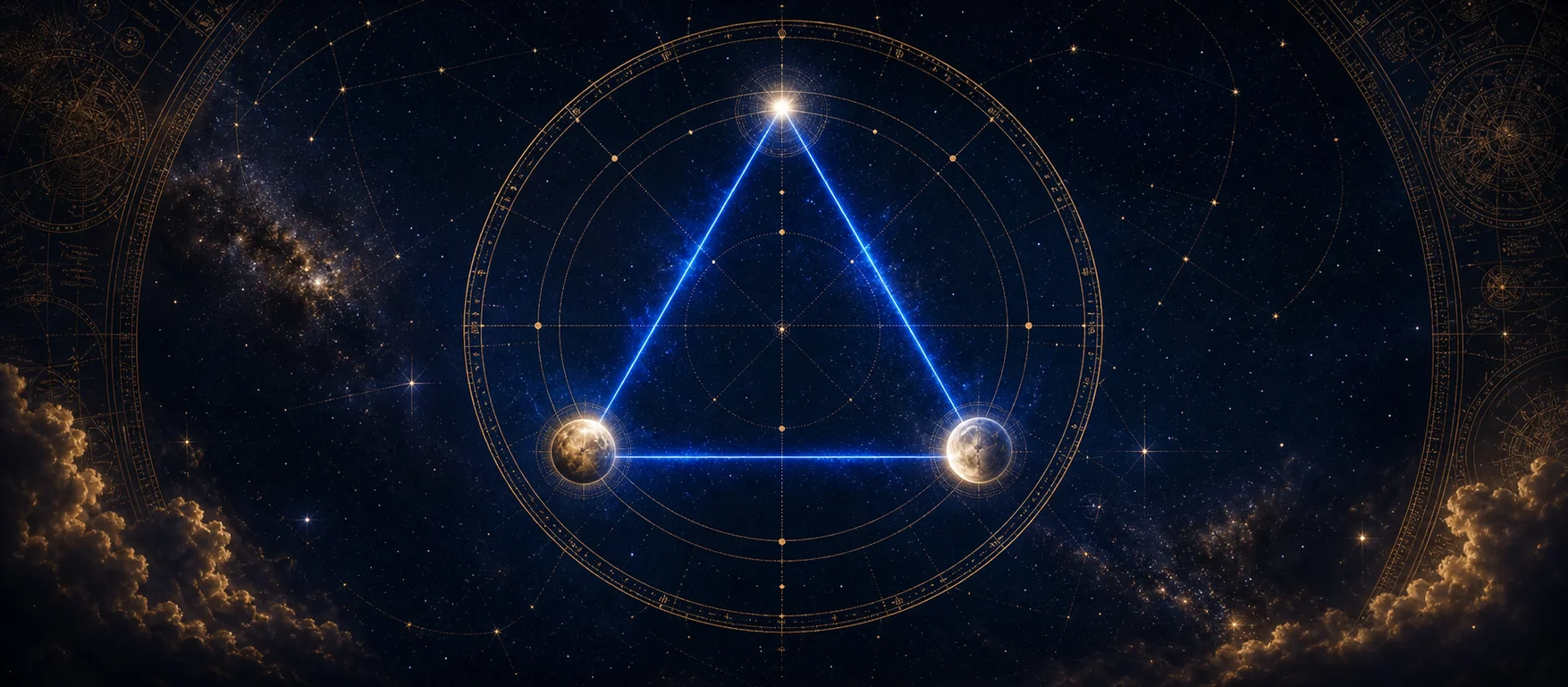
Harmonious circuit: Uranus, Moon, and Mercury
This is the easiest door into the chart: it shows what tends to cooperate naturally.
This pattern describes what comes more easily. It shows up mainly through House 2 (money, security, and self-worth), House 8 (intimacy, shared money, crisis, and transformation), and House 9 (beliefs, studies, travel, and worldview). It connects Uranus (change, freedom, rupture, and originality), Moon (emotional needs, instinct, and inner safety), and Mercury (thinking, speech, and decisions).
This is the clearest cooperation pattern in the chart: Moon trine Uranus (orb 4.9°) and Mercury sextile Uranus (orb 4°). It shows where functions support each other, recover, or come naturally when used together. Because several planets are connected, the full pattern matters more than one isolated aspect.
-
Harmony
Moon trine Uranus (orb 4.9°)
Trine: Moon in Virgo in House 2 can support Uranus in Taurus in House 9 naturally and positively. For this pair, the aspect gives ease keeping the personal dream alive through change. Mother-image layer: childhood, mother image, and inner child are supported by Uranus.
-
Harmony
Mercury sextile Uranus (orb 4°)
Sextile: Mercury in Pisces in House 8 can cooperate with Uranus in Taurus in House 9 in the same concrete choice or situation. For this pair, the aspect lets intellect and Uranus cooperate in invention, quick replies, technology, or a changed perspective.
4. Important tensions
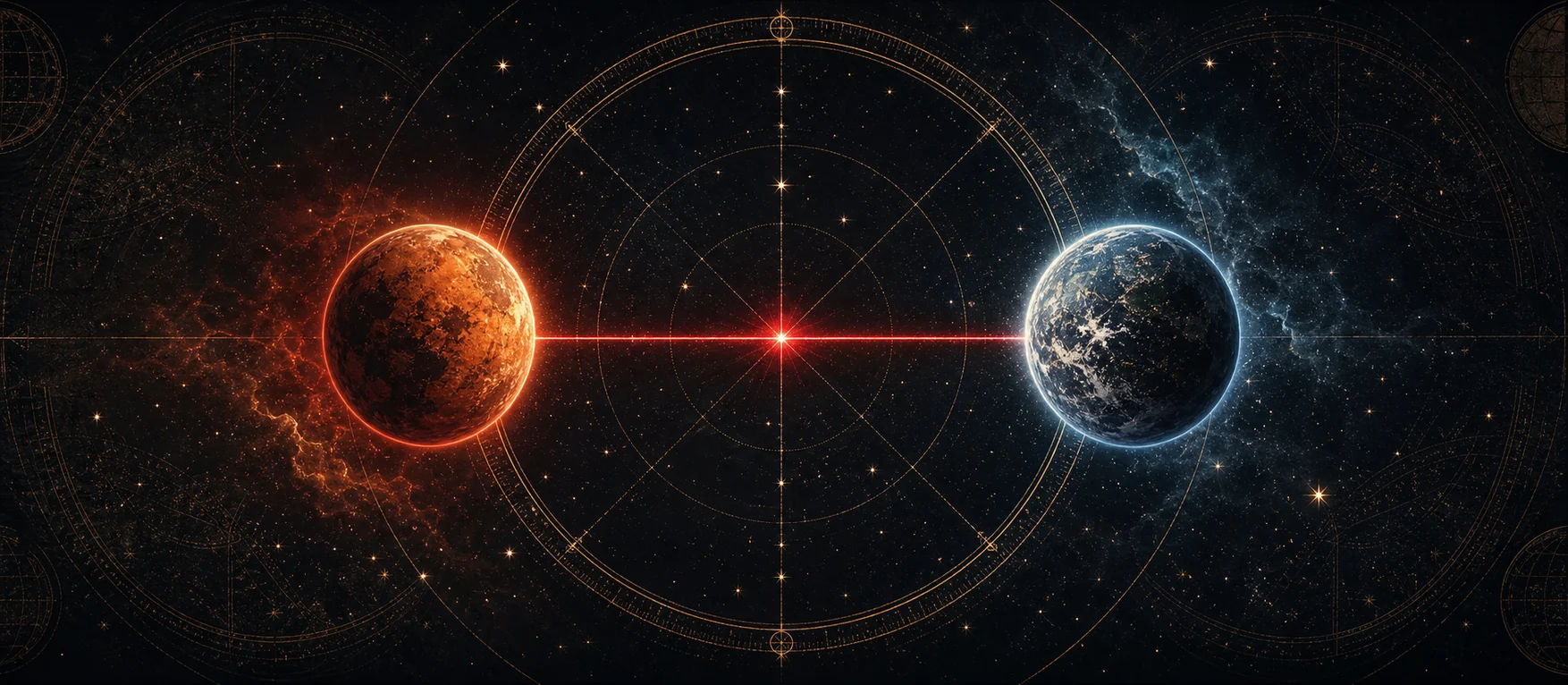
Tension circuit: Mercury, Moon, and Neptune
This is the pressure line to read first: it shows where tension repeats in concrete situations.
This pattern shows where pressure builds fastest. It shows up mainly through House 2 (money, security, and self-worth) and House 8 (intimacy, shared money, crisis, and transformation). It connects Mercury (thinking, speech, and decisions), Moon (emotional needs, instinct, and inner safety), and Neptune (dreams, ideals, imagination, and confusion).
This is the clearest friction pattern in the chart: Moon opposite Mercury (orb 0.9°) and Mercury opposite Neptune (orb 2.4°). It shows where pressure, contradiction, or repeated effort concentrates. Because several planets are connected, the full pattern matters more than one isolated aspect.
-
Tension
Moon opposite Mercury (orb 0.9°)
Opposition in real life: The house conflict is between House 2 (resources, values, and security) and House 8 (sexuality, shared power, crisis, and invisible bonds); pressure in one field tends to reactivate the other. For this pair, the aspect sets personal dream, childhood imprint, or mother image against intellect and language: what is imagined or remembered can contradict what is said.
-
Tension
Mercury opposite Neptune (orb 2.4°)
Opposition in real life: The house conflict is between House 8 (sexuality, shared power, crisis, and invisible bonds) and House 2 (resources, values, and security); pressure in one field tends to reactivate the other. For this pair, the aspect opposes precise thought to dream, image, vagueness, or collective sensitivity.
5. Important houses
These houses answer the concrete question: where in life does the chart become visible? Look here for the repeated choices, relationships, work, or crises that make the rest of the chart real.
-
House 8: Mercury, Venus, and Jupiter
sexuality, shared power, crisis, and invisible bonds.
-
House 7: Sun and Lilith
relationship, confrontation, and the mirror of others.
-
House 9: Mars, Saturn, and Uranus
vision, belief, study, and wider horizons.